Adderall vs. Vyvanse: A Guide by Bonus Round Recovery
At Bonus Round Recovery, we understand that choosing the right medication for ADHD can be a critical step in managing symptoms and reclaiming control of your life. Both Adderall and Vyvanse are effective treatments for attention-deficit hyperactivity disorder (ADHD), but they differ in ways that may impact your recovery journey. Our San Diego-based team, led by founders who have overcome addiction themselves, is here to provide empathetic, informed guidance to help you make the best choice for your needs.
Key Points
Both Adderall and Vyvanse boost dopamine and norepinephrine to treat ADHD, but Vyvanse requires metabolic activation as a prodrug.
Adderall offers immediate-release (4-6 hours) and extended-release (10-12 hours) options, while Vyvanse is only extended-release, lasting 10-14 hours.
Adderall is approved for ADHD and narcolepsy; Vyvanse is approved for ADHD and binge eating disorder.
Side effects are similar, but Vyvanse often provides smoother effects with fewer “crashes” compared to Adderall.
Your choice depends on lifestyle, treatment history, side effect tolerance, and risk of misuse.
What is Adderall?
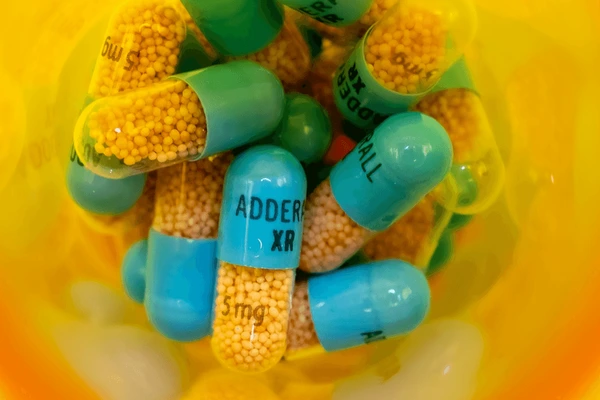
Adderall is a central nervous system stimulant combining dextroamphetamine and amphetamine. It increases dopamine and norepinephrine levels, enhancing focus, attention, and impulse control. Approved by the FDA for ADHD in children and adults, as well as narcolepsy, Adderall is available in immediate-release (IR) and extended-release (XR) forms. At Bonus Round Recovery, we work with your healthcare provider to ensure Adderall aligns with your recovery goals, offering structured support through our IOP and PHP programs.
Dosing Flexibility: IR requires multiple daily doses; XR provides all-day coverage with one dose.
Benefits: Improves concentration, reduces impulsivity, and supports task completion.
What is Vyvanse?
Vyvanse, containing lisdexamfetamine, is a prodrug that activates only after metabolism in the digestive system, converting to dextroamphetamine. This gradual process offers steady symptom control. FDA-approved for ADHD across all ages and binge eating disorder in adults, Vyvanse’s extended-release capsules align well with the structured schedules of our San Diego transitional housing residents.
Smooth Delivery: Provides consistent effects for 10-14 hours.
Unique Advantage: Lower misuse potential due to its prodrug nature.
Adderall vs. Vyvanse: How Are They Similar?
Adderall and Vyvanse share core features, making them trusted options for ADHD management, as supported by the empathetic care at Bonus Round Recovery.
Therapeutic Class: Both are amphetamine-based stimulants.
Mechanism: Increase dopamine and norepinephrine for better focus and impulse control.
Purpose: Reduce ADHD symptoms like inattention and hyperactivity.
Prescription Status: Schedule II controlled substances requiring prescriptions.
Side Effects: Include decreased appetite, insomnia, and increased heart rate.
Efficacy: Comparable success in managing ADHD symptoms.
Monitoring: Require regular check-ins, which our team supports through personalized care plans.
How Are They Different?
While similar, Adderall and Vyvanse have distinct characteristics that influence their use in recovery.
Chemical Structure: Adderall uses mixed amphetamine salts; Vyvanse is lisdexamfetamine, a prodrug.
Activation: Adderall works immediately; Vyvanse requires metabolic conversion.
Onset: Adderall starts in 30 minutes; Vyvanse takes 60-90 minutes.
Duration: Adderall IR lasts 4-6 hours, XR 10-12 hours; Vyvanse lasts 10-14 hours.
Dosing: Adderall offers IR and XR; Vyvanse is only extended-release.
Misuse Potential: Vyvanse’s prodrug form reduces abuse risk, a key consideration for our clients with substance use histories.
Approved Uses: Adderall treats ADHD and narcolepsy; Vyvanse also treats binge eating disorder.
Release Pattern: Vyvanse offers smoother effects; Adderall may have peaks and valleys.
Formulations: Adderall is a tablet; Vyvanse capsules can be mixed with food or water.
Generics: Adderall has generic options; Vyvanse does not.
Do They Have Different Side Effects?
Adderall and Vyvanse share similar side effects, but their delivery affects how you experience them. Our clinicians at Bonus Round Recovery monitor these closely to support your well-being.
Intensity: Adderall’s effects may feel stronger initially; Vyvanse’s are milder but steadier.
Appetite: Both reduce appetite, but Vyvanse may cause less severe suppression.
Sleep: Adderall IR can disrupt sleep if taken late; Vyvanse’s long duration may also affect sleep but less disruptively.
Mood: Adderall may cause mood swings; Vyvanse’s gradual release minimizes this.
Crash: Adderall’s “crash” can be more noticeable; Vyvanse tapers more smoothly.
Cardiovascular: Both raise heart rate and blood pressure, but Adderall IR may cause sharper spikes.
Digestive: Vyvanse may cause fewer stomach issues for some clients.
What Factors Should Be Considered When Selecting the Appropriate Medication for ADHD?
Choosing between Adderall and Vyvanse involves personal factors, which our San Diego team helps you navigate alongside your doctor.
Treatment History: Past responses to stimulants guide decisions.
Schedule Needs: Daily routines determine whether short- or long-acting options suit you.
Metabolism: Individual differences affect how each drug processes.
Side Effect Tolerance: Sensitivity to specific effects influences choice.
Misuse Risk: Vyvanse may be preferred for those with substance use concerns, aligning with our recovery-focused mission.
Lifestyle: Diet, sleep, and activity levels impact effectiveness.
Symptom Timing: When ADHD symptoms peak affects medication choice.
Frequently Asked Questions About Adderall vs. Vyvanse
What are the main differences between Adderall and Vyvanse for treating ADHD?
Adderall acts faster with IR and XR options; Vyvanse offers smoother, longer-lasting effects as a prodrug with lower misuse potential.
Why might a healthcare provider prescribe Vyvanse instead of Adderall?
Vyvanse may be chosen for its extended duration, smoother effects, or lower risk of misuse, especially for those with addiction history.
How do the side effects compare between these stimulant medications?
Both share side effects like appetite loss and insomnia, but Vyvanse often feels milder with fewer crashes.
Can Adderall and Vyvanse be used to treat conditions other than ADHD?
Yes, Adderall treats narcolepsy, and Vyvanse treats binge eating disorder in adults.
Are generic versions available for both medications?
Adderall has generic options; Vyvanse remains brand-only due to patent protection.